From carboxyl polarity to amine-neutralized/saponified emulsions—a detailed explanation of the stabilization mechanism of oxidized Fischer-Tropsch wax in waterborne systems. Grades, acid values, and saponification values are all from Heyee Chem's real products.
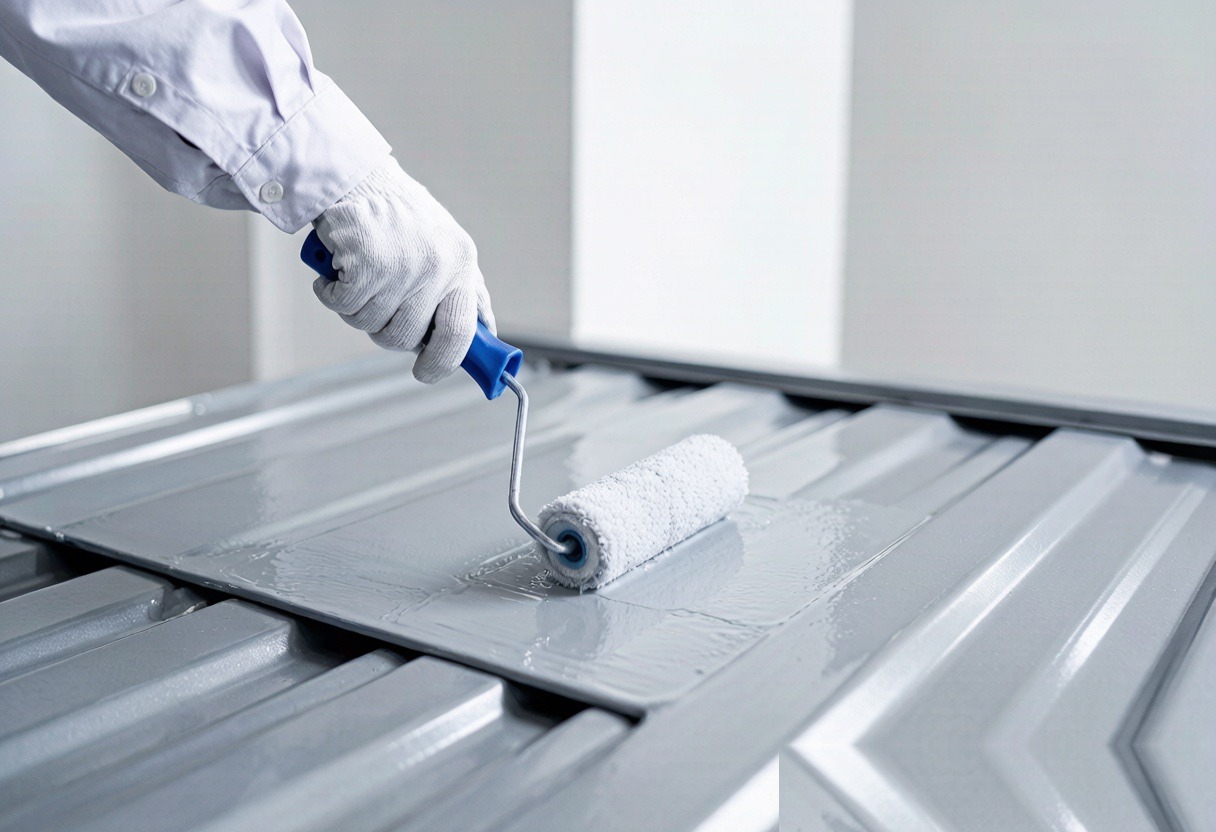
Ordinary Fischer-Tropsch wax is a non-polar straight-chain alkane and insoluble in water; oxidized Fischer-Tropsch wax (Oxidized F-T Wax) introduces carboxyl (—COOH) polar groups onto the molecular chain, giving it a measurable acid value. After neutralization with amines into ammonium salts, or saponification with alkali into salts, the polar ends face outward and the wax chains inward, forming stable micelles in water and yielding a waterborne wax emulsion. This is the fundamental reason it can be used in waterborne coatings, leather finishing, and printing inks.
| Grade | Drop Melting Point | Acid Value (mgKOH/g) | Saponification Value | Form | Waterborne Use |
|---|---|---|---|---|---|
| HY-9128 | 102℃ | 27–30 | — | Off-white coarse powder | Emulsion, leather, coatings |
| HY-100-28 | 100–105℃ | 27–30 | — | Off-white micro-beads | Emulsion, PVC |
| HY-104-28 | 95–102℃ | 27–30 | — | Off-white micro-beads | Emulsion, PVC |
| HY-105-32 | ≥105℃ | 30–35 | — | Off-white micro-beads | Emulsion, PVC high-end |
| HY-B39 | >110℃ | 12–18 | — | Coarse powder | PVC lubricant |
| HY-B52 | Oxidized F-T wax series | — | — | — | PVC processing & lubrication |
| Saponified Wax | 107℃ | 9–13 | 27–37 | Pale-yellow coarse powder | Emulsion, PVC |
| HY-859 | 108–115℃ | 3–8 | 14–28 | Off-white granules | Micronized ink, coatings, emulsion |
Easy emulsification / General-purpose emulsion → HY-9128, HY-104-28, HY-100-28 (acid value 27–30)
High-end waterborne / High stability → HY-105-32 (acid value 30–35)
Strong hydrophilicity / Saponification system → Saponified Wax (saponification value 27–37), HY-859
Lubricating / Low polarity → HY-B39 (acid value 12–18), HY-B52
Ordinary Fischer-Tropsch wax is a non-polar alkane and barely dissolves in water; oxidized Fischer-Tropsch wax introduces carboxyl (—COOH) polar groups onto the molecular chain, giving it a measurable acid value (e.g., Heyee HY-9128 acid value 27-30 mgKOH/g). After neutralization with amines into salts or saponification with alkali, the polar ends face outward and the non-polar wax chains inward to form micelles, enabling stable dispersion in water and the production of a waterborne wax emulsion.
The higher the acid value, the more polar groups are available for neutralization/saponification, making emulsification easier and emulsion stability better, but too high may affect the film's water resistance. Heyee's oxidized Fischer-Tropsch wax acid values range from 12-35 mgKOH/g: HY-B39 (12-18) leans lubricating; HY-9128/HY-104-28 (27-30) emulsify easily; HY-105-32 (30-35) suits high-end waterborne. Saponified wax additionally contains saponification value 27-37, offering stronger hydrophilicity.
It mainly enhances film surface properties: scratch/abrasion resistance, a smooth slippery feel, controllable matting, improved anti-blocking, and assists pigment dispersion. Because of its fine particle size and good compatibility, oxidized Fischer-Tropsch wax is commonly used in waterborne wood lacquers, industrial coatings, leather finishing, and printing inks.
Oxidized Fischer-Tropsch wax: HY-9128 (drop melting point 102℃, acid value 27-30, coarse powder), HY-100-28 (100-105℃, acid value 27-30, micro-beads), HY-104-28 (95-102℃, acid value 27-30, micro-beads), HY-105-32 (≥105℃, acid value 30-35, high-end), HY-B39 (>110℃, acid value 12-18, lubricating), HY-B52 (PVC processing & lubrication). Saponified wax: congealing point >90℃ / drop melting point 107℃ / acid value 9-13 / saponification value 27-37; HY-859 (drop melting point 108-115℃, acid value 3-8, saponification value 14-28, for micronized ink, coatings, emulsions).
Oxidized Fischer-Tropsch wax has a narrow molecular weight distribution, whiter color, and finer feel, suiting high-end waterborne coatings and leather; oxidized polyethylene wax (e.g., Heyee's HY-OPE series) has higher polarity and better water/chemical resistance, suiting industrial coatings with strict durability requirements. The two can be blended to balance feel and resistance.
